This sounds an awful lot like a guild of guilds, no? I had the dunbar number in mind with the idea when it started. Small circles connected to big ones.
100%
LLMs are just math. I would counter by saying that they are useful for one thing: haboring and organizing what David Deutsch calls “exiting knowledge.”
So for example if you had a jiu jitsu problem - say you were stuck in a choke - you could use an LLM to find existing answers and knowledge that humanity already has. BUT if you wanted to come up with a new, creative answer, AI could never do this. AI can only regurgitate or recombinate using math. As you said, it is just predicting the next word based on the data it has. Where did that data come from? It came from people. We create that knowledge.
So let’s say that Einstein’s theory of relativity was never invented yet. AI could never come up with it on its own. This kind of knowledge David Deutch calls “new knowledge” and it can only come from “people” (of which he includes humans). Creating new knowledge is not probability. It is instead created by conjecture, trial and error, and more conjecture. And people are very very good at imagining, creating, and using conjecture.
There are a LOT of great videos by David on the internet on knowledge, knowledge creation, AI, AGI, etc. He was the father of quantumn computation, the main proponant of the many worlds theory of quantum mechanics (which btw is the most reliable theory we have in all of science next to entropy), but in my opinion his best work is in epistemology and knowledge creation. This was 2019 before the AI boom when he said this @DannyM :
My notes on your article:
- The memory problem you outlined by “chunking” is something I have studied as well. There are two ways to remember things bigger than the typical 6-10 characters people can memorize. The first is chunking and the second is with a story. Here is a fun thing I use when I describe memory:
’If I told you to remember 50 letters in a row, most peope would forget after 7 or 8. For example if I said to repeat these back to me:
LSKENFJKALDJENAMPQQWSNRQFSKDLKKWMORJSFMWKKLOAJI
That is 50 letters, and you would not get far past the first K.
But if I said to you: THE LITTLE BOY AND LITTLE GIRL WENT TO THE STORE TO GET A GALLON OF MILK
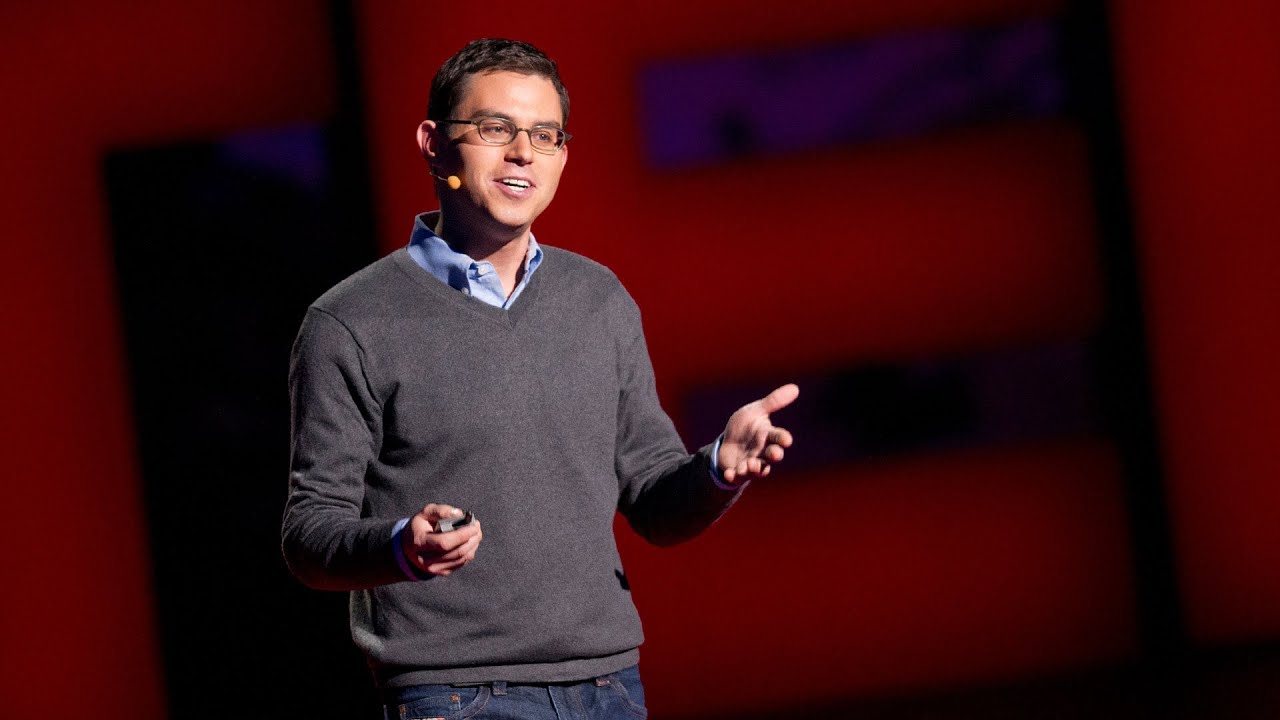
That is more than 50 letters and you could easily remember it - because of both chunking and the story painting a picture in your mind. There is an amazing TED talk on this here, where journalist Joshua Foer is covering the memory world championships, and then learns the techniques and comes back the next year and WINS first place in it:
-
The Dunbar number is really about trust. That can be scaled in my opinion the same way Amazon and Ebay do it - decentralized. But I do think we need small circles of trust connected to big ones, with a base code of conduct we have for both. I also think - and both Danny and Gino know I expressed this - of having a way to mix IRL and URL (in real life with digital URL life). This was a topic at a Network State convention Gino and I attended once. By mixing them we can lock AI and bots out of our groups and systems
-
@DannyM you criticize text based communications pretty hard here, but your entire thesis (which I mostly agree with) is text based - but long form. I also think the criticism of AI is too sharp, as I believe that any powerful too can be used for both good and bad. Nuclear, electricity, flight, etc. Dr. Rosenberg has been using a form of conversational collective intelligence enhanced by AI and I think the results are showing that we can use both, together, as long as the systems are trustworthy. I posted this in another thread but if you missed it his methodology here is eye opening.
https://www.youtube.com/watch?v=FrY0Gr5p144
Yep, I think that eventually I want to have an even better version of it, but I’m ok with publishing it
Yep, true
I mostly criticize text based communication on devices with limited context. (such as phones)
I tend to agree with you, however I haven’t found a case yet where AI beats out someone who actually knows what they’re doing in that field ^^
1 Like
You should see the tests with doctors diagnosing patients. Individual doctors, vs AI doctors, vs swarms. Swarms win, but AI doctors are second. Swarms beat individual doctors by 30%.
I’ll be honest I’m skeptical of an article claiming that an “AI doctor” is better than a human one.
Something I would believe is that machine vision trained specifically on one problem (such as say cancer screening) can have a higher correct detection rate than a human doctor, but at the same time it will also have a higher false positive rate, and a more devastating false negative rate. That’s a far cry from a general AI doctor tho.
I believe the swarm tho. Of course multiple minds are better than one!
It wasn’t just an article, it was a scientific paper that compared results. It did not do false positive rates and was really not the best structured experiment for comparing with AI. But it was interesting nonetheless.
Danny could you email me your long form article so we can publish it please? Complete with links.
Well, if it doesn’t take into account false positives and false negatives, then the only reason for a group of scientists to publish that paper is to get further funding because ai sells well, haha
of course!
Hey Danny
It publishes tomorrow.
The footnotes didn’t transfer too well but I kept them anyway. I also know you like you privacy so I used your name from on here - Danny the Cyber Guy. I can change it to whatever you want.
After it publishes I can edit out the footnotes if they are still too weird.
I chose your title:
**Why is Everyone so Angry Online Today?
subtitle:**
Danny The Cyber Guy’s manifesto on why digital long-form discussions belong on computers, not phones, and specifically on high trust networks like Eve.
The rest should be verbatim.
Set for 7am tomorrow
1 Like
@DannyM your post is live and getting good traction and reception. Thanks for letting the Society of Problem Solvers post it (you are part of the the society now, lol), and let me know if you want your real name on there and a contact. Thanks for being part of this and sharing that awesome piece! It has almost 1000 reads in one day.
2 Likes
My next long form article (which I’ll probably finish by beginning of february) is about why notifications as they’re implemented today are terrible, and how there’s a simple solution that everyone is missing
2 Likes
Everything look ok? Want me to change anything?
looks good to me, only thing I would want to change is that I wish the references were rendered better, as they are here, but whatever substack doesn’t support it, it’s alright
Beautifully succinct! Moreover this is a huge problem… worse as you implie - this is also discussed albeit abstract or higher scales. I could go in with a more philosophical structure articulated by Wittgenstein and even dialectical thoughtforms; superfluous ad nauseum! You are describing the silo effect and the steps to how they are built! I love it.
I’m just getting into this, I suppose you have solutions… I’ll presuppose: bracketing as a method for blocking… superposition or thevanizing is term used for summarizing circuits in electronics… more to the point, it’s not like we use these words to sound smart - maybe, and even if - hold ourselves to it - what in the world are we pointing at?! For me we need that discursive kerouac style rant…we need to orientate - via the yin, “right-brain” , whatever… we gotta “come to terms” , get “on track” or maybe even “get in the water” with me. I’ve literally just added this to my practice : slowing down, contemplating, leaving a breadcrumb trial… for Others. But still it can in itself become an infinite left brain precision defractaling out of site/sight.. siloing. So then I say too - in retort to “know thy audience” - the audience can show up, give leeway , and ask what do you mean…. I know I’m all discursive… but I’m hoping you grasp as we dance around a very similar form..
One solution is etiquettes; not the pompous class distinguishing kind, more like a set of rules, consenting, DIY/Bit (build it together)… blockchain could even verify - that’s a whole other structure to add.
Sorry if I’m being too ranty and over bearing… that’s sort of my first in move… I’m requesting that you take any phrase as a gateway to another possible mental structure…
Pull on any thread… I’m more practical and disciplined than this comment may project! Haha.
I’ll keep reading.. very excited to work on practical solutions if you are interested… I have some, been working on some and am interested in hearing you out…
Also , I’m not so fragile.. I enjoy thoughtful critique and even understand different power dynamics at a personal level… if you have a way you prefer… if you prefer I slow down and structure myself… whatever, of you have an etiquette for showing up for work/collab in your relm please share.
Alphabet is a code! and we chunk all sorts of meanings onto words, phrases, whatever.
Sometimes it’s easier to have conversations with English as a second language people… they ask : what do you mean, an orientational trigger. There’s a certain tricksterness with native speakers, especially growing up or developing through different experiences.
Ok I’ve settled down! I love it.. and I have more questions!
I think the most significant technology of the last at least 5000 years is the symbol. I mean a lot by that. In short other words maps and indexes. We might do this with digital maps, pics, docs … and then annotate them and have indexes searchable like iTunes… and users can add column sets… I’d actually go so far as to add layers of columns so groups can add generalities, categories, etc…
I do think this Eve ware is probably still the foundation… but then what of scale… of nesting - like it would be useful to have travellers, guilds : each community might only need 1 electrician.. but and that electrician might want to be connected to other electricians…
Also what of adding organizational tools; office suites, mindmapping, AutoCAD, etc. organizational developmental operations?
Anyways, thanks again, your beginning does an excellent job of articulating the silo effect: how it happens in real time. And the rest is also well done.
1 Like
Here’s my cleaner comment!
Danny’s piece on chunking and lossy compression is one of the best explanations I’ve seen of how communication silos actually form at the cognitive level. And Eve looks like exactly the right kind of tool for the foundation — small, sovereign, no algorithmic interference, proper threading. I’m genuinely excited about it.
One thing I keep coming back to though: Danny almost names the next problem when he mentions FidoNet and UseNet — small communities that started federating. That’s the edge. “What if we didn’t scale?” is a clean answer for any single community, but the world’s problems do scale, and sovereign communities still need to coordinate across boundaries without collapsing back into centralization. Decentralization isn’t the same as distribution.
What I’d love to see is people actually getting on video and starting to build: agree on a shared toolkit (office suite, mindmapping, annotation, video), onboard people into it, and start making a real collaboration agenda. Eve as one core tool among several — not the whole ecosystem, but an essential piece of it.
Writing something longer on the federation/coordination gap. Will drop a link when it’s ready.